While UK charitable giving fell by £1.4 billion in 2025 – down to an estimated £14 billion, the first drop since 2021 – Refuge’s winter appeal did the opposite.
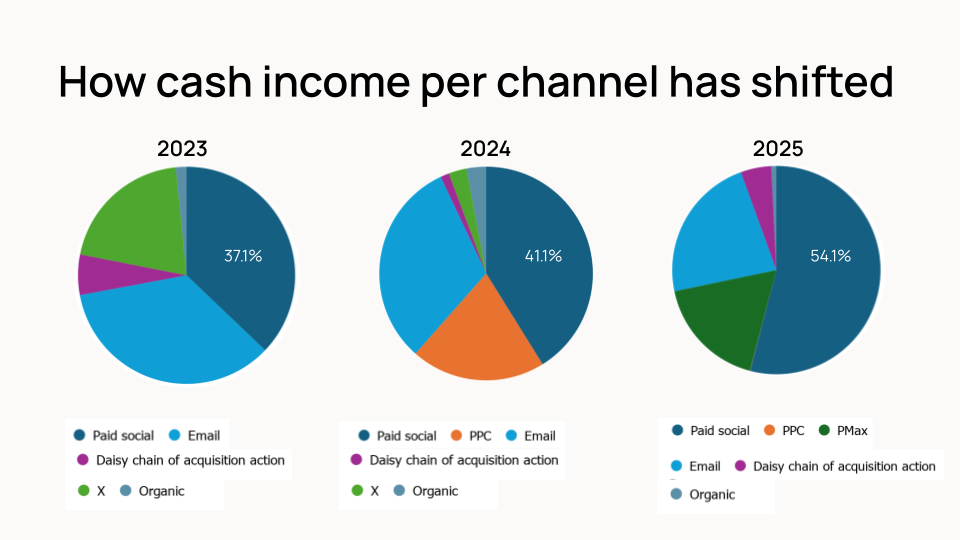
They raised £530,000 – 127% of their goal, with half of that coming from people who’d never given to them before, and paid social performance beating M&R and Rally sector benchmarks by 400%.
What did they do differently?
Not one big idea, as it turns out. It came down to how they planned, tested and built the campaign.
What made Refuge’s winter fundraising campaign work
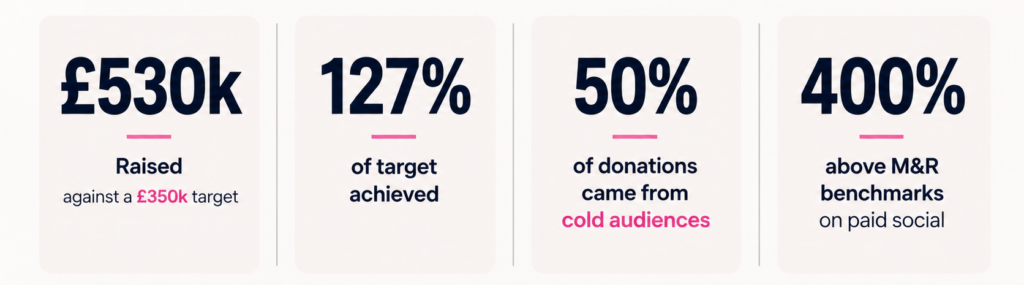
Refuge’s success came from four things done consistently and tested relentlessly, building momentum through the campaign rather than relying on one big launch moment.
Here’s Refuge’s 4 key lessons for this year’s winter appeal.
1. Get your tracking sorted before anything else
It’s tempting to jump straight to the fun part – the creative, the ask, the channel mix. But none of that work tells you anything if you can’t see what’s actually landing, so Refuge sets tracking up as the foundation everything else sits on, well before the campaign goes live. That starts with agreeing what you actually want to know:
- Who’s landing on your donate page
- Where they’ve come from
- What it’s costing you to get them there
Once the whole team is aligned on that, Refuge uses a shared naming convention for every campaign link, feeding into one master spreadsheet, so the whole team can see it in one place.
Because that view updates throughout the campaign rather than just at the end, Refuge can shift budget mid-appeal – moving spend toward Meta or PMax as soon as one starts outperforming the other, rather than waiting until the appeal’s over to draw conclusions.
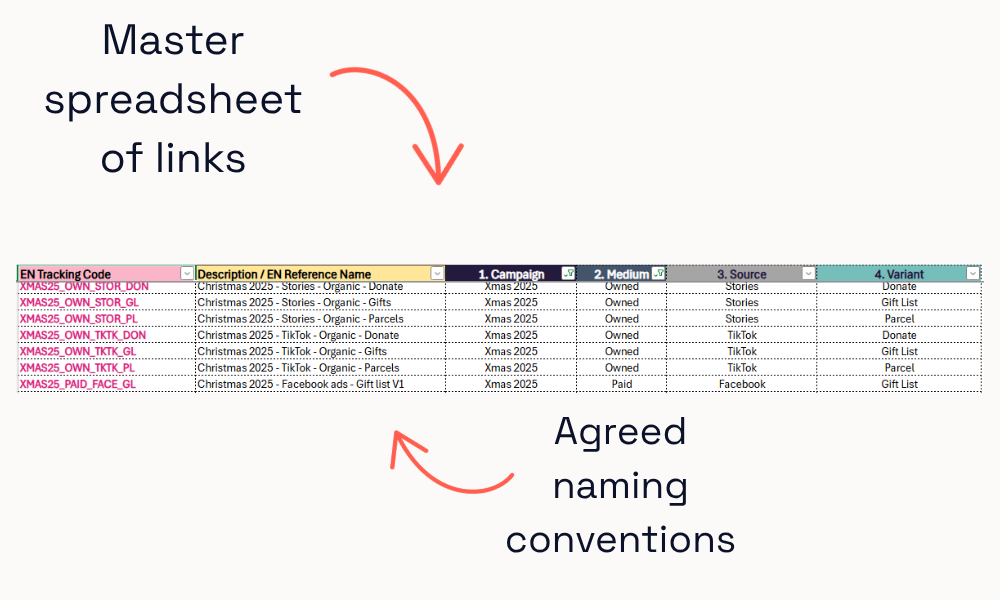
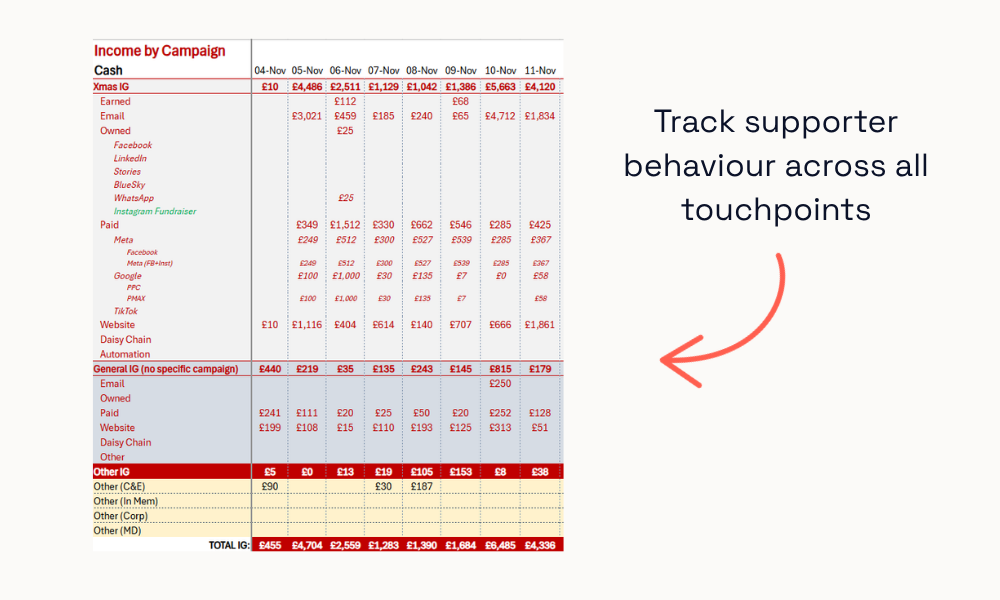
“You can’t learn from your wins or your flops if you don’t track them.”
Georgia Acton – Refuge
Live tracking is also what makes testing worth doing at all. Refuge tests far beyond subject lines.
For paid media, they test:
- Channels
- Audiences
- Asks
- Formats and imagery
For email, they test:
- Framing
- Imagery
- Signatories
- Send times
For landing pages, they test:
- Upsells
- Imagery
- Prompt amounts
As Georgia put it, testing this broadly – rather than limiting yourself to the odd email test – is what can have a real impact on income.
How to put this into action in 2026:
Before choosing any tools, agree with your team what you actually want to know – at minimum, who’s landing on your donate page, where they’ve come from, and what it’s costing you to get them there. Then set up one shared naming convention for campaign links, so everyone’s looking at the same picture.
2. Build one proposition, then let every team make it their own
A single, unifying proposition keeps every team singing from the same hymn sheet, rather than each running their own version of the story.
Refuge starts every appeal with one proposition. In 2025, it was “give a child and their mum their first Christmas of freedom”, built to be tangible, uplifting, and to give hope. Every team, from digital to press to individual giving, works from that same core story.
But a shared proposition doesn’t mean identical messaging everywhere. Refuge found that survivor stories perform well on organic social but not on paid ads. So channel owners are trusted to adapt the core story to what works best for their audience and format, rather than forcing one version of the message into every channel.
This kind of tailoring also extends to who you’re targeting. Refuge saw particular success with mid-value donors in 2025 – supporters who gave somewhere between £1,000 and £5,000 a year – and built specific messaging and prompts designed to inspire higher average gifts from this group, rather than treating every donor the same.
“We start with one single, unifying proposition, and from that, we can build out these tangible asks.”
Georgia Acton, Refuge
How to put this into action in 2026:
Agree your core proposition – just one sentence – before you touch a single channel plan. Then ask each team: what does this look like adapted for your audience?
3. Give supporters something specific to act on
Refuge’s most effective creative gives donors something concrete and manageable: a parcel, a jumper, a Christmas dinner for a mum newly arrived in a refuge. On Instagram, their gift-framed ads returned 255% ROAS – the highest of any channel or ask they tested, ahead of parcel ads on Facebook (183%) and dinner ads on Google (248%).

Timing matters just as much as framing. Refuge used Black Friday and Giving Tuesday as moments to harness in their emails. For example they reframed the impulse to spend on Black Friday into an impulse to give, with messaging like “what if your deal of the day was a Christmas dinner parcel for a family starting over in a refuge?”
And they don’t stop at one email send: a simple “kicker” follow-up email, sent shortly after their best-performing send with just a few extra lines added, brought in 253% of that original email’s income.
Not every cause has an obvious shopping-list item to sell, and that’s a common question – particularly for organisations running less tangible programmes, where an ask like “buy a teddy bear”, doesn’t map neatly onto what you do.
In those cases, tangibility can still come from outcomes rather than objects: what does a specific amount of money make possible for one person, even if there’s nothing you could put in a box? An example from Refuge is an ask like “Can you give £5 to help a family settle in?”.
Leaning into urgency around a real moment – the start of term, a funding gap, a matched-giving deadline – can do a lot of the same work that a literal gift list does elsewhere.
Matched funding is worth calling out on its own, too. It answers a real objection: why give right now, rather than next week? If you can secure matched funding for even part of your appeal, introducing it early and clearly is worth the effort.
How to put this into action in 2026:
Pick one specific, tangible ask for your next campaign moment, and test a moment-led framing (a key date, a deadline, a matched-funding window) against a more evergreen version. And whatever performs best – send it again, with a few new lines on top.
4. Give your donation page the attention it deserves
A brilliant fundraising appeal can still lose supporters at the final hurdle if the donation page gets in the way.
Refuge keeps form fields to a minimum, and tests page layout and content just as rigorously as anything upstream – including, in one case, testing a page with video against one without. The version with video converted at 11% versus 9%, and supporters on that page gave more on average too: £39.40 versus £30.87 for one-off gifts, and £8.56 versus £8.09 for regular giving.
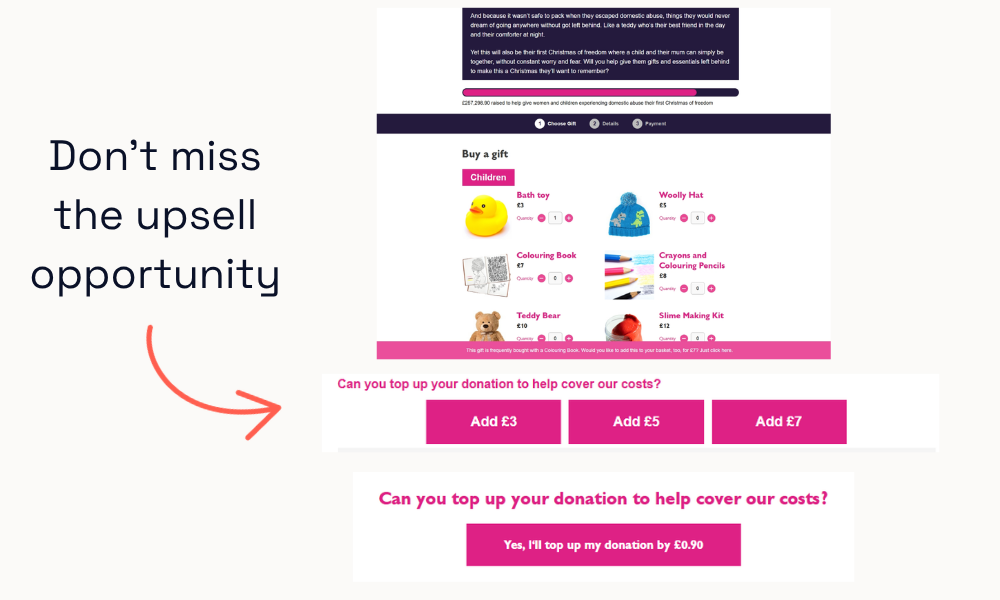
The other consistent win has been the on-page upsell. Styled like an e-commerce checkout – “hey, you bought a teddy bear, do you want to buy a colouring book as well?” – Refuge sees 50–60% of supporters add a top-up to their gift when it’s framed this way. It’s worth testing that wording on its own, separate from your main ask, since what resonates at the checkout stage may be different from what works earlier in the journey.
How to put this into action in 2026:
Audit your own donate page for unnecessary form fields, and test one upsell prompt on your highest-traffic page this year – even a simple “would you like to add £3 to help cover admin costs?” is worth trying.
Your plan for winter 2026
Here’s a five-point plan to get started:
- Set up your tracking now – a shared naming convention and a simple way to see what’s driving income, before the campaign goes live.
- Write one proposition that’s tangible, uplifting and gives hope – then let each channel adapt it, rather than forcing identical messaging everywhere.
- Choose one specific, tangible ask per campaign moment, and lean into real dates and deadlines rather than running an evergreen message throughout.
- Test your donation page as seriously as your creative – form fields, imagery, and at least one upsell prompt.
- Review, prioritise, test, learn – build this cycle into how you work all year, so this year’s results shape next year’s plan.
This is digital mobilisation: turning passive followers into active catalysts for a cause, through consistent testing and iteration across the year.
If you want to go deeper on any of this, Refuge’s Senior Acquisition Executive Georgia Acton and our own Jess Hodge covered a lot more detail – including live audience questions – in our webinar on winter fundraising.
And if you’d like to continue the conversation and hear about our upcoming events, webinars, and blogs, come find us on LinkedIn.
Want a hand thinking through your own winter fundraising campaign? Get in touch – we’d love to chat.