Do you only ever put your hand up when you know the answer?
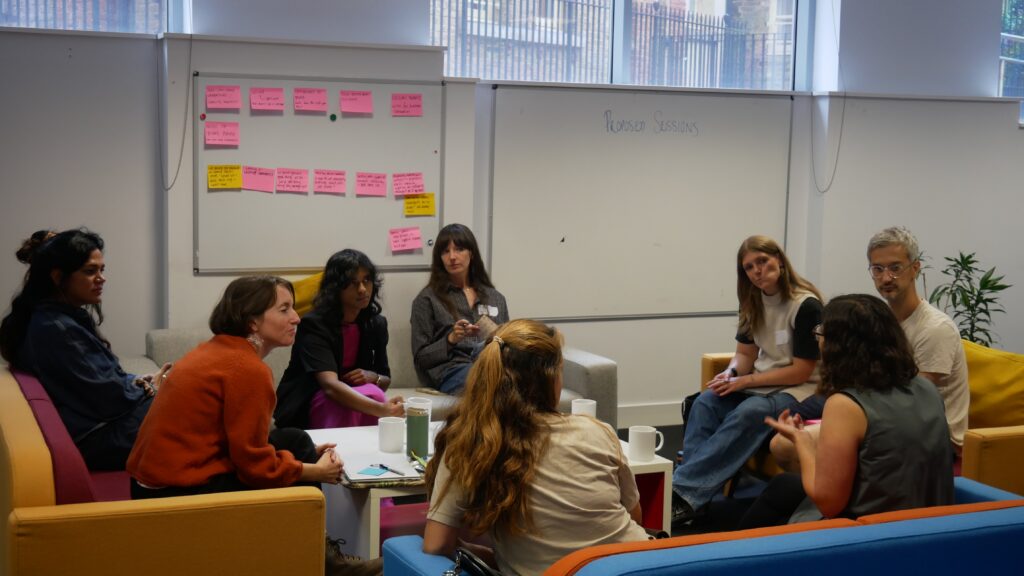
This is the question our first speaker opened with on Friday. Around 60 of us from across the progressive sector spent the day together at our fifth Building Digital Power event, an unconference on defeating the radical right, jointly hosted by Forward Action and Rally. Throughout the day, many people were willing to say something they hadn’t finished working out yet. That’s not something we do enough of, and encouraging this helped us make progress.
Please note: To protect those who generously gave up their time to speak at our recent event, and in light of HOPE not hate’s recent research, we have chosen not to name individuals in this blog. However, the ideas in this blog were born through conversations and provocations from participants at the event, and Forward Action does not take credit for everything we’ve said here.
We already know how to win
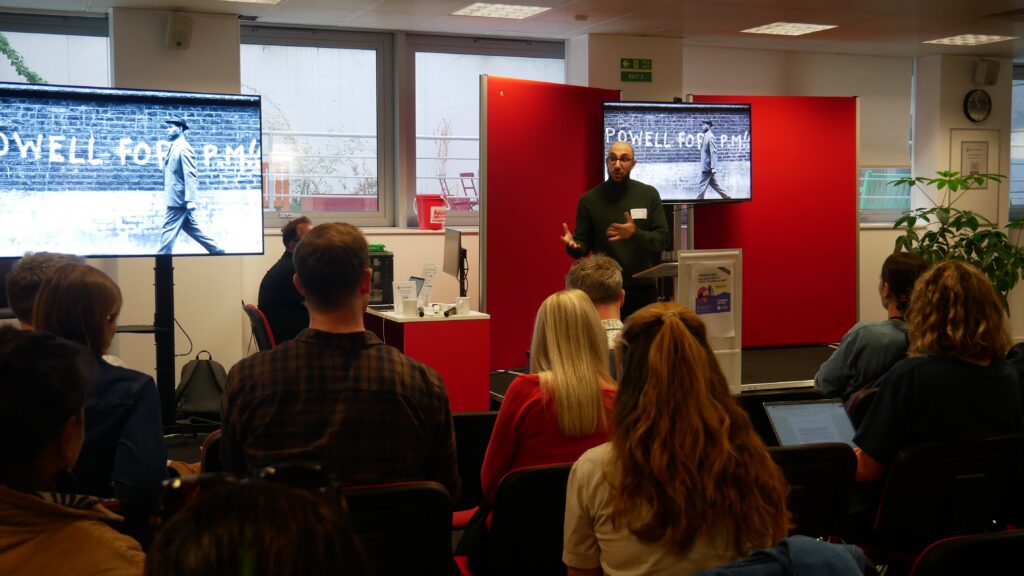
Our next speaker took us back to the communities who fought racial discrimination in Britain in the 60s, 70s and 80s. The playbook isn’t new even if the tactics are. I found it reassuring to remember that people have found this answer before.
What’s changed is proximity. Those communities knew who was attacking them. They could trace them to a family two streets over and turn out enough visible defiance that holding those views became socially unacceptable. We spend more time online now and less with our neighbours, so the people organising against us are anonymous, and our own resistance is mostly invisible to anyone who isn’t already following us. The challenge is how to unmask the individuals driving the radical right, and make the scale of the opposition to them visible again.
The people who care about communities are already working in them, and they are the least resourced part of this fight. Strong community networks leave less room for the radical right to fill when people are feeling alone and forgotten.
There’s no more time to waste
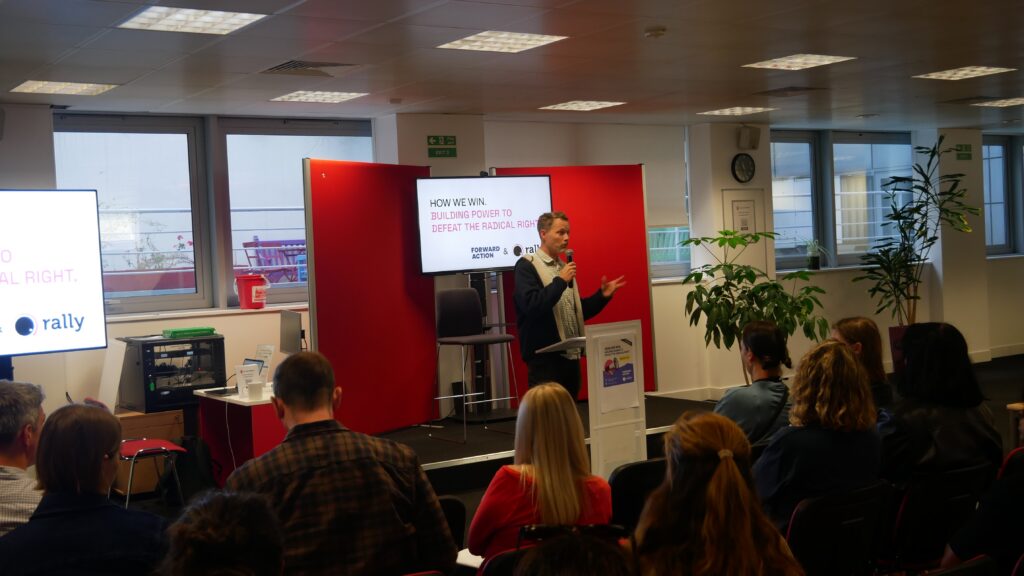
A lot of sector energy is going into planning for what we’d do under a Reform or radical right government. One speaker argued that this is largely wasted, because under that government most of our missions lose their funding and their policy support anyway. The work that counts is stopping it happening. So the question to ask is whether we’re working at anything like the scale this needs.
They also named something I suspect a lot of us recognised. UK charities have enormous reach and deep public trust, and plenty are self-censoring what they say politically, worried about prosecution or public backlash. We can already see how dissenting voices are treated under authoritarian leaders elsewhere. The point is that waiting to find out whether the same happens here is itself a decision. Maybe it’s time to find some budget for fines, find some courage, and find our voices.
Build power where people already are
One participant, who has combined their experience organising and building digital communities, facilitated a session that got specific about what all this means for those of us working digitally.
The starting point is the so-called “dead internet”. Bots and AI-generated content (or slop, depending on how you see it) are being funded at a scale we can’t match, to manufacture noise and convince the algorithms that the radical right is worth paying attention to. While the group agreed that there’s a real ethical tension in copying those tactics directly, we explored workarounds that have been working well in the sector. Like clipping, where you ask hundreds of real supporters to share content on their own channels, rather than paying a bot for amplification. And working with the many thousands of creators and influencers out there who don’t want the far right to win, helping them to amplify your work because they actually care about the issue.
We agreed that the ultimate aim should not be to grow followers for followers’ sake. If we want to win against the far right, we should be looking to cut through on the platforms everyone’s on, then move people somewhere that isn’t owned by a tech billionaire.
Some of the most important spaces, as the group put it, are real-life human communities. They build connection and camaraderie, and they’re where you can give people some of the most useful ways to fight back. Organisations like Fossil Free London, HOPE not hate, Good Law Project and Trussell have already been doing great work to engage their online communities in everything from lobby days to flyering actions to student trainings to contacting councillors and MPs. It takes somewhere between seven and ten touchpoints before most people take a first action. So the answer is more opportunities, offered more often, and less anxiety about being too much.
And then trust people with more of it
We can all move fast in a crisis. The rest of the time campaigns get stuck under layers of sign-off.
Real organising means loosening our grip a bit. On brand guidelines, and on the worry that a supporter will say it wrong. What do you actually trust people to do? If the honest answer is “not much”, why not?
That sits next to the question that got us started in the morning, about putting your hand up, and the point about finding some courage. These get at something I think most of us felt by the end of the day. Almost nothing we discussed on Friday was held up by not knowing what to do. We’re waiting for a bit more certainty before we move, and there isn’t time for that.
What people are taking away
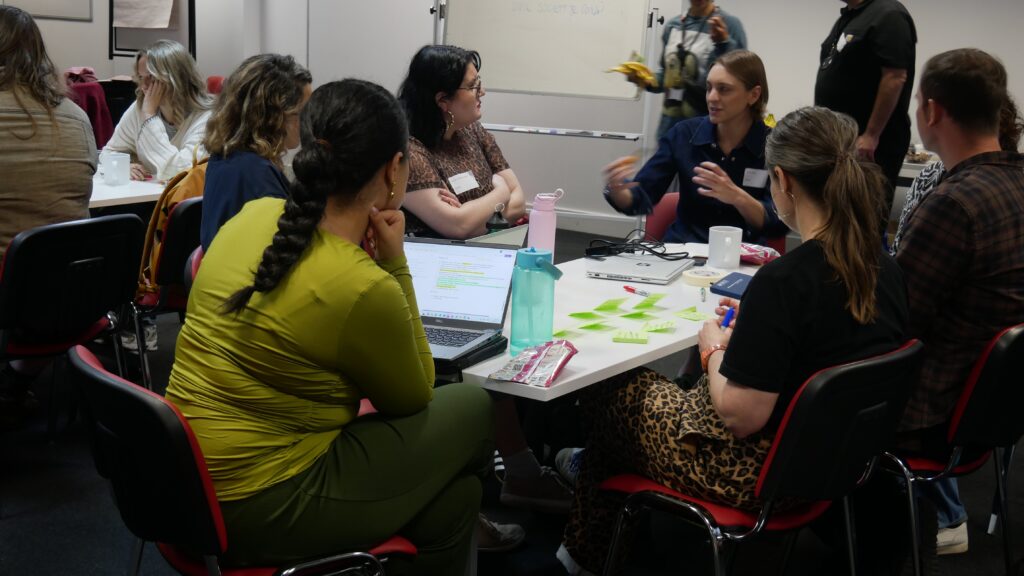
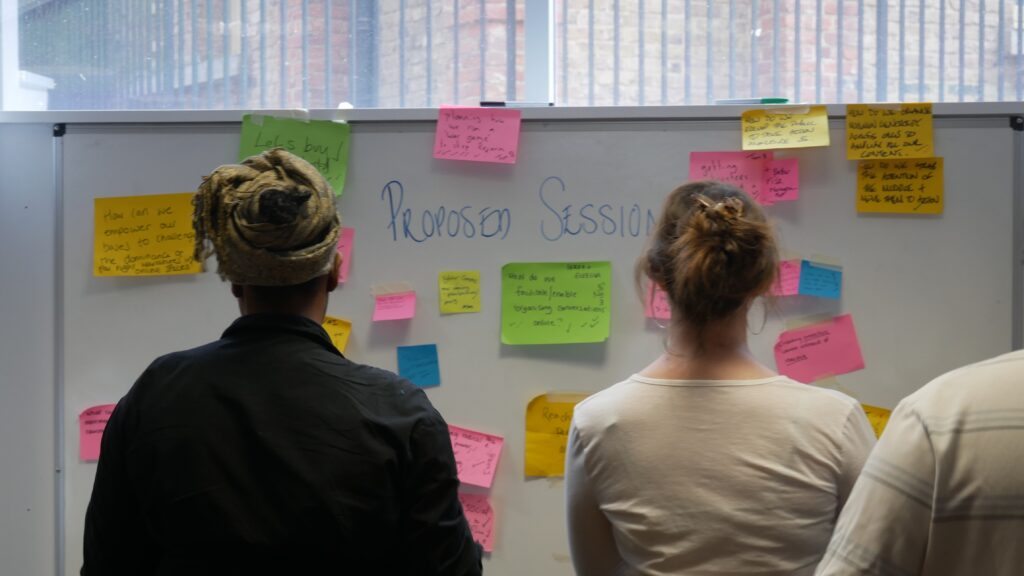
The second half of the day was self-organised, and people left with plans rather than notes.
Sessions also ran on radical digital organising, engaging persuadable audiences, reactive social, working with community organisations, building a war room to stop the far right, creating spaces of belonging and what the radical right understands about belonging that we don’t, and enabling organising conversations online. Some of those groups have carried on talking since Friday and started organising themselves, which is the best thing that could have come out of the day.
We’re mapping everyone’s action plans now, so we can share them back and connect people working on the same things. If you were there and haven’t sent yours over yet, we’d still love to have it!
Still open
Plenty went unresolved. The ones I’m still chewing on:
- How do we scale up fast without burning out the same small group of people?
- What does a board need to hear before it accepts more risk as part of the mission?
- Who funds community infrastructure at the scale this needs, and how do we make that case to funders?
- How do we get sign-off down from weeks to hours without losing what it’s there to protect?
From the conversations I was having, I could tell that people arrived understanding the problem and left energised to keep on working, with a lot of them committing to do something about that this week rather than next year. Thank you to everyone who spent their Friday with us, and to all the speakers for setting it up so well.
If you’d like to join future events like this, you can subscribe to our email list to hear about them first.
And if you have an idea for a public mobilisation project or joint funding proposal that’s aimed at defeating the radical right, we would love to chat!