Last week I spent ten glorious, intense hours inside Vienna’s magnificent Rathaus with 600 political communicators from 30 countries, including people from 20 political parties. It was the first ever Political Communication Summit, convened by Josef Lentsch and the team at Partisan, and Forward Action was proud to sponsor it.
Why? Tbh, that’s a question I asked myself more than once in the run up – we didn’t have swag printed, or even a roll out banner. Working a four day week is fabulous, but it means that sometimes things like event sponsorship become a little more MVP. But enough radical transparency – here’s the real reason we sponsored this event. We’re obsessed with building digital power to tackle the radical right. And that’s not something any one organisation, party or country can do alone.
If we want to push back populism, we need to bring people together to share what’s working, what isn’t, and what we can learn from each other. And it feels more important than ever. So when Josef from Partisan reached out to let us know about the event, it felt like an important opportunity to invest in an event that we truly believe in.
Here’s what I came home thinking about.
Going public with Digital Relational Organising
Our brilliant strategist Eleesha Taylor-Barrett and I kicked off the day in a room bedecked with glittering chandeliers. We were there to share early learnings from our Digital Relational Organising pilots.
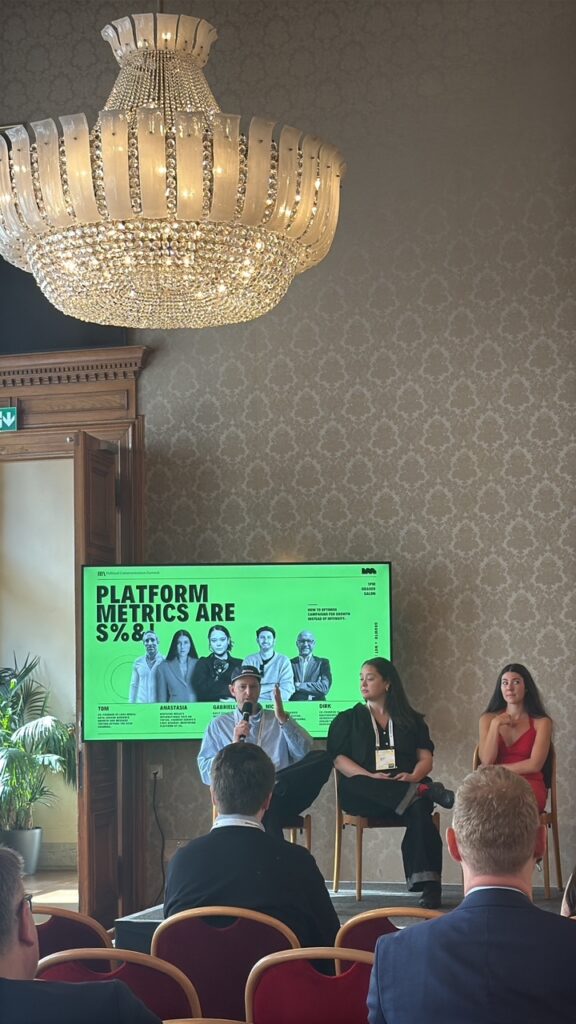

It was the first time we’ve spoken publicly about this work, which Eleesha, my co-CEO Berry Cochrane and our partners have been developing over the past year. It was clear that plenty of people in that room are asking the same question we are: how do we build real power against the radical right?
The theme of the day: trusted messengers
Across all the sessions I went to, whether they were presentations or panels, regardless of the countries and party lines, the key theme was the need to build trusted messengers.
“We have to get much more comfortable letting go of tight control and putting trusted voices at the centre”
People increasingly tune out institutions, parties and campaigns. They still listen to people they know and trust. The official channel for a message is rarely the most effective one to make sure that it’s heard. It’s the creator someone follows, the expert they respect, the community leader they see every week, or simply a friend, colleague or family member.
For progressive organisations, political parties and charities, this is uncomfortable. We’re built to protect the message: sign-off processes, approved lines, brand guidelines. Those things exist for good reasons. But if we want to reach people beyond our own bubble, we have to get much more comfortable letting go of tight control and putting trusted voices at the centre, online and in the real world.
That’s how we start to push back against the populist wave.
Less outrage, more outreach
It can feel like we’re fighting losing battles, trying to stem the rise of the far right, but remember this: literally millions of people don’t want their countries handed over to populist governments. The problem is that in our divisive online ecosystem, many of them don’t want to pile into public debate. When the comment sections are filled with insults, posting publicly feels risky, so the people who don’t support these ideas stay quiet, and the loudest voices fill the space.
But those people who don’t want to feed the trolls in the comments are still having conversations every day, in group chats, at the school gate, over dinner, at work. It’s in those real spaces where trust lives, and that’s where we need to be. Our digital relational organising model is about empowering people to have genuine conversations within their own networks, rather than asking them to shout into the void.
Less outrage, more outreach, if you like. (Fair warning, I’m pretty proud of this, so I will be using it a lot).
There was no avoiding AI
Inevitably, AI came up, again and again. I was introduced to the idea of a “solved economy”: what happens when there are no problems left for a society to solve? Imagine. It’s an interesting question. But the reality of the dream being sold looks more like a nightmare to me, and I’m worried about what we’re being forced to give up to get there.
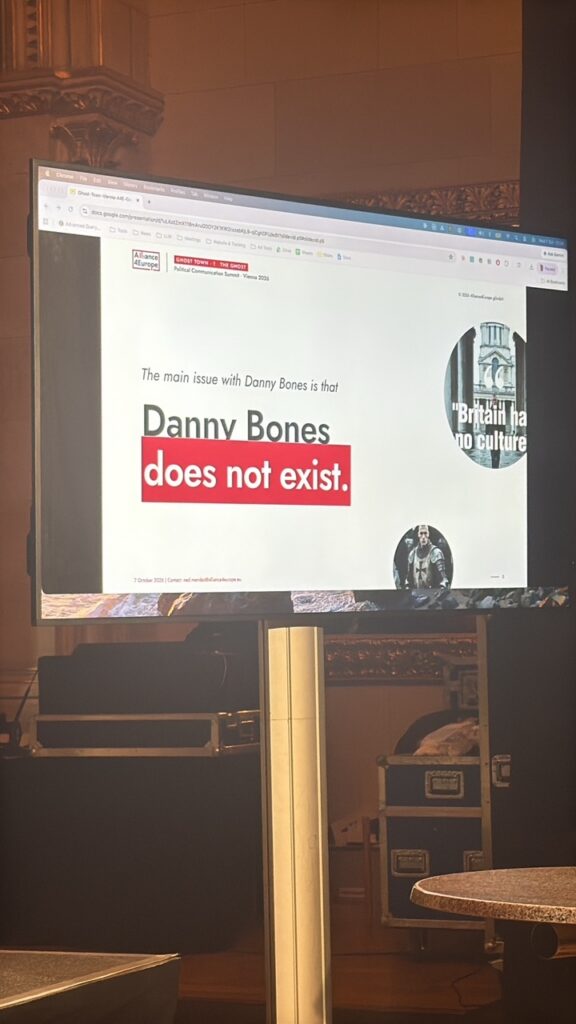
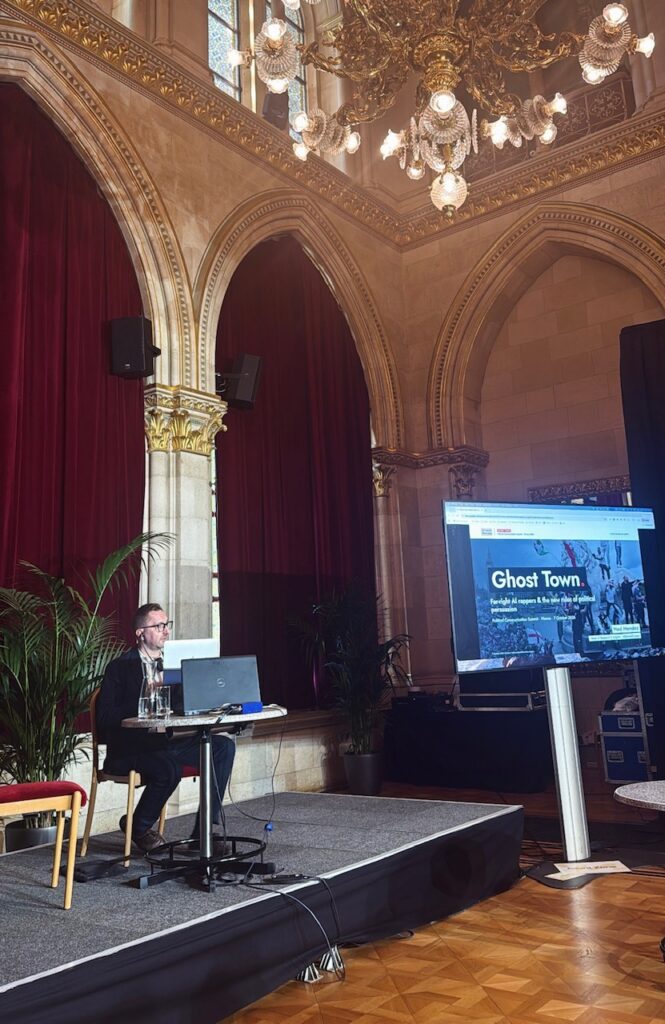
Ned Mendez from Alliance 4 Europe shed some light on this with the story of Danny Bones, a successful online rapper. The only catch? Danny Bones isn’t real, he’s an AI creation, developed to help a far right party in a by-election by pushing their messages to an enormous online audience.
That’s a sobering flip side to the trusted messenger idea. If authentic voices are our best way to reach people, the far right is already working out how to manufacture them. I preferred it when stories like this were all figments of Charlie Brooker’s imagination.
Room for hope (and an unexpected dash of pride)
I’ll admit I was worried that a whole day immersed in European politics might leave me feeling overwhelmed. Sometimes the scale of the challenge feels enormous.
But there was hope, too. Hearing Andy Burnham’s speech discussed as a potential turning point in the fight against populism gave me an unusual sensation. Could this be… national pride? Steady on.
His willingness to communicate what he authentically believes, and to challenge the establishment, is being watched closely by political communicators across Europe. He has a tough winter ahead, and the real test will be what happens over the next few years. But it points to a pathway that we need to remember, speaking authentically will cut through where carefully managed messaging will fail.
We need to get better at sharing
The radical right is incredibly well-connected and well-funded. Its strategies travel across borders fast because they are designed to. Our fights are interconnected, but our strategies, too often, stay locked inside individual organisations.
As closing speaker German political strategist, Heiko Kretschmer observed, if we’d come together like this five or six years ago, we’d have been having very different conversations. We can’t change the fact that we’re only just starting. But we can make sure this is the beginning of something, not a one-off.
I’m excited to have been part of what Josef and the Partisan team have started. And I’m excited about the role Forward Action can keep playing: developing narratives that counter the far right, building communities, and helping people connect, organise and participate as citizens.
If you’d like to hear more about our Digital Relational Organising work, please get in touch. We’d love to talk.